Games, culture and education

Structura’s projects bring universities, writers and games professionals together. Through international discussions and practical editorial work, participants study interactive works, preserve their history and train to write about games or translate them for new audiences.

The Games Forum Roma

The Games Forum Roma brings game developers together with people who research, teach and preserve games. Structura and Women in Games founded the international working forum, which is co-directed by Marco Accordi Rickards, President of Structura, and Dr Marie-Claire Isaaman, CEO of Women in Games. The University of Rome Tor Vergata was Main Partner of the first edition, held on 12 and 13 November 2026 at Villa Mondragone in Monte Porzio Catone, near Rome.
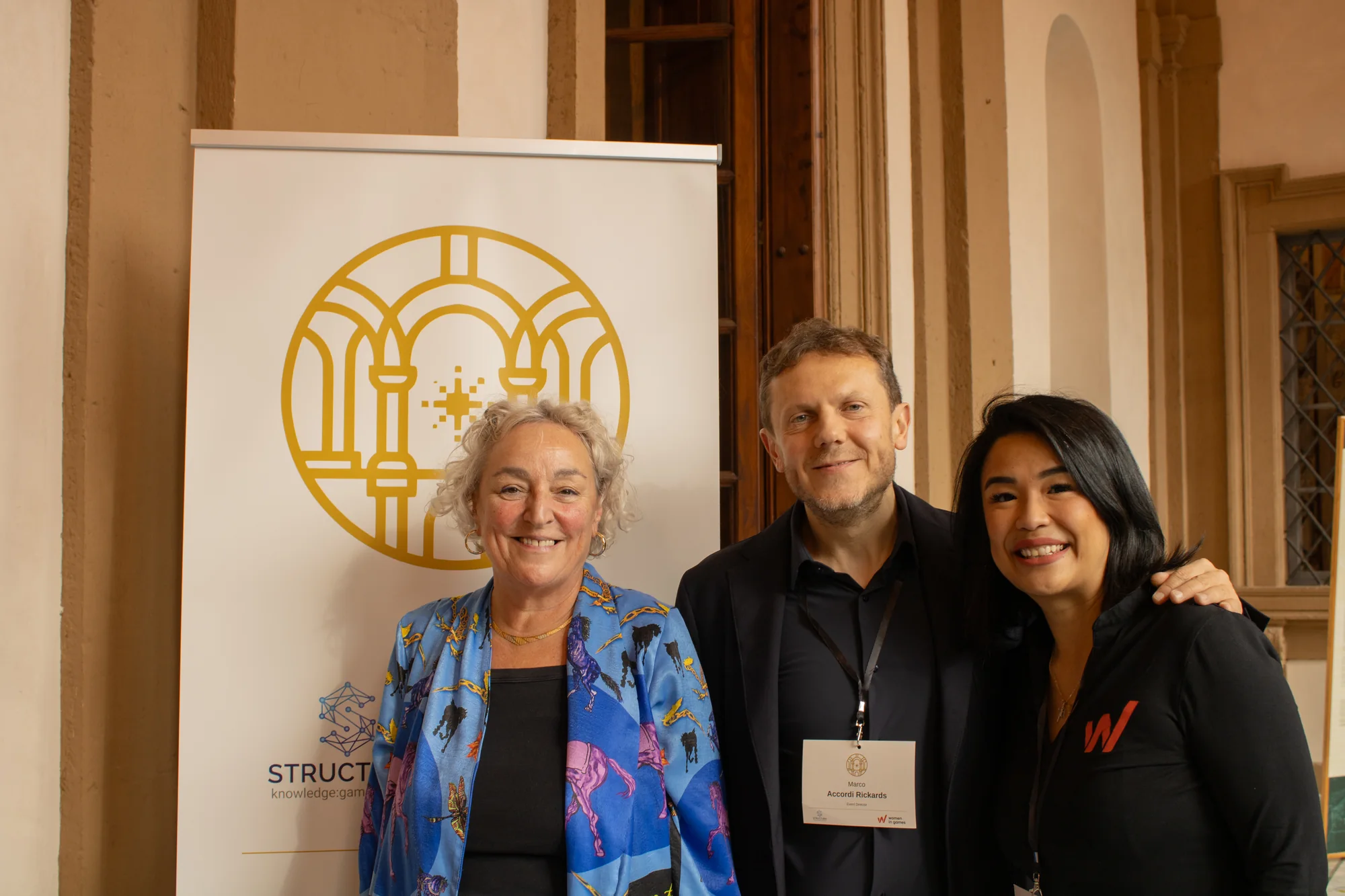
Photos and videos from the first edition

Opening of The Games Forum Roma at Villa Mondragone
Photograph by Eleonora Vitali, Structura
Programme, the Rome Roundtable and Circulus

The programme was organised around Culture, Community and Commerce. Two keynotes and nine panels covered subjects ranging from game preservation and routes into the industry to localisation and the international growth of European studios. A hands-on workshop led by game designer Menno Deen invited participants to explore how people can read the same design choice in different ways.

The Rome Roundtable brought European organisations and networks together for two working sessions on gender equality and Europe’s digital future. Circulus is the Forum’s network for carrying these conversations forward through year-round working groups, research and joint projects. The first edition’s archive includes photographs by Eleonora Vitali (Structura) and selected video excerpts with English subtitles.

The Game Dam

The Game Dam is an essay series on Vgmag dedicated to the history and cultural memory of video games. Each season brings together writers who approach a shared theme from different perspectives. Idra Editing plans to publish each cycle in print and digital editions, with revised essays and new material.

How The Game Dam began (in Italian)

Season one and its 11 essays

The first season explores the relationship between literature and video games. From Douglas Adams and Steve Meretzky’s work on The Hitchhiker’s Guide to the Galaxy to a reading of the rooms in What Remains of Edith Finch through Virginia Woolf, the essays ask what happens to a story when its reader can also act within it.

Literature and video games

Game Horizons

Game Horizons is Structura’s conversation series on interactive culture. Students, game makers and researchers explore how games are designed, how they are adapted across languages and cultures, and the experiences they make possible.

Game Horizons at Tor Vergata (in Italian)

Events at Tor Vergata and Pantheon

At the University of Rome Tor Vergata, Marco Accordi Rickards organised the seminars as part of his course on the theory and criticism of multimedia and interactive works. On 16 March 2026, Francesca Noto (GameLoc Academy) discussed the work of games localisation. On 30 March, Maurizio Rigamonti (Swiss Game Academy) explored gameplay and the educational applications of games. On 13 April, Marie-Claire Isaaman (Women in Games) examined inclusion and diversity in the games industry.

With Istituto Pantheon Design & Technology, the series continued with the Summer Talks, hosted by Marco Accordi Rickards and Gianpaolo Iglio. Topics included AI in game design, independent production and the international games market. At the closing event in Rome on 22 September, Final Boss Fight, Riccardo Cangini of GymGamEnt joined a programme combining game development, gamification and team games.

Structura and Romics

In 2026 Structura worked with Romics, the international festival of comics, animation, cinema and games, to bring two creators to Fiera Roma whose work crosses the boundaries between media.

Chris Darril on Bye Sweet Carole

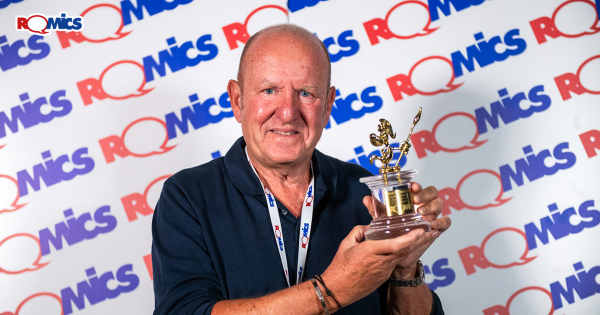
Sir Ian Livingstone holding the Romics Gold Award
Talks with Chris Darril and Sir Ian Livingstone

On 12 April, at the 36th edition, Marco Accordi Rickards interviewed Chris Darril on the Movie Village stage. Darril discussed how his studio, Little Sewing Machine, drew on the visual language of classic cartoons to create the dark fairy-tale world of its adventure game Bye Sweet Carole.

On 3 October, at the festival’s 37th edition, Sir Ian Livingstone received the Romics Gold Award. Structura helped bring him to the festival. In conversation with Max Giovagnoli and Marco Accordi Rickards, the Games Workshop co-founder looked back on his career, from the Fighting Fantasy gamebooks to his work with Eidos Interactive.

Video Game Journalism Course

How do you verify a story about a video game? How does a review differ from a preview? GameLoc Academy and Idra Editing run this course with the Vgmag newsroom, bringing together the critical study of interactive works and the practice of journalism. Structura helps develop and review the curriculum. Marco Accordi Rickards and Gianpaolo Iglio direct the course.

Official course website (Italian)

Dates, fees and work placement

The spring 2027 edition runs from 24 April to July. It includes 44 hours of live online teaching on Friday and Saturday afternoons, with recordings available to participants. Students write news stories, features and reviews, practise interviewing a developer and present a final paper.

The standard fee is €600. Participants who register by 31 December 2026 pay €400. The fee includes an optional remote placement with Vgmag, open to students who have completed at least two of the four required assignments.

Adopt an Indie

Adopt an Indie helps independent developers bring their games to Italian-speaking players and gives GameLoc Academy students a professional localization credit. Structura created the competition and runs it on behalf of Idra Editing. Academy director Francesca Noto coordinates the professionals who supervise the students as they translate and edit the game text.

2027 competition rules and entry form

The 2027 competition and 2026 results

Submissions for the 2027 edition run from 15 October 2026 to 15 January 2027. Independent studios and solo developers worldwide can enter free of charge with a game originally written in English that has yet to be fully localized into Italian and has up to 10,000 words to localize. The jury will announce its selections in early February 2027. Two games can receive a full Italian localization free of charge, one from the spring class and one from the autumn class.

PolyPine, the forest ecosystem simulator created by Anton Holmberg at the Swedish studio Cloudberry Pine, won the summer 2026 competition and is now playable in Italian. Fellow finalist Knockout 2: Wrath of the Karen, by ExceptioNULL Games, went on to become a separate GameLoc Academy localization project.

Ultime News

No Posts Found

Our People Reviews